Franz Kafka’s Prague (2026): 8 Must-See Places Every Fan Should Visit
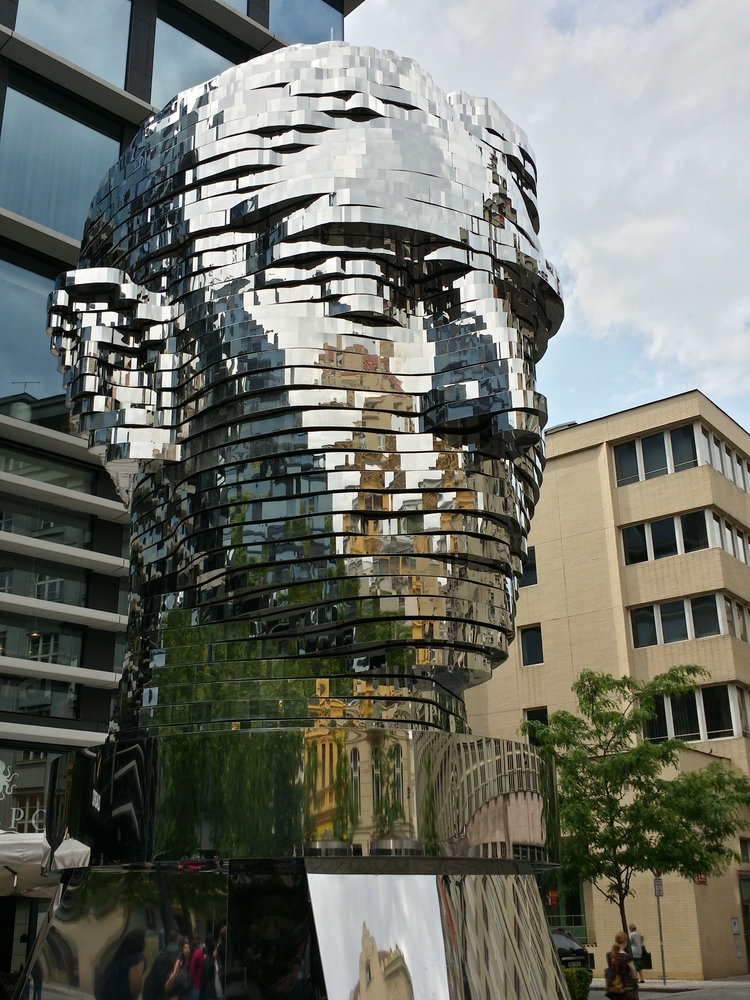
Franz Kafka was born in Prague, lived most of his life in Prague, wrote almost all of his work in Prague, and is buried in Prague. He hated the city and could not leave it. “Prague doesn’t let go,” he wrote to a friend in 1902. “This little mother has claws.” This walk visits the places where Kafka lived, worked, suffered and occasionally laughed.
Who Was Franz Kafka?
Franz Kafka was born in Prague on 3 July 1883 into a German-speaking Jewish family. He studied law, worked for most of his adult life at an insurance company, and wrote in the evenings and nights — producing a body of work that would define 20th-century literature while remaining almost entirely unpublished during his lifetime. He died of tuberculosis in 1924 at the age of 40, asking his friend Max Brod to burn everything he had written. Brod did not. The novels that Kafka never finished — The Trial, The Castle, Amerika — were published posthumously and read by the entire world.
He was Czech by birth, Austrian by citizenship, Jewish by faith, German by language, and Praguer by everything. Prague does not straightforwardly claim him — and he did not straightforwardly claim Prague — which makes walking his city a more complex experience than most literary pilgrimages.
Interactive Map — All 8 Stops
Map data © OpenStreetMap contributors. Click any marker for details.
The Walking Tour — Stop by Stop
Franz Kafka was born on 3 July 1883 in a house on the corner of what is now náměstí Franze Kafky — Franz Kafka Square. The original building was demolished in 1897 during the clearance of the old Jewish ghetto, and the current building is a 1902 replacement. A small bust of Kafka marks the spot, along with a plaque.
The square is tiny and easily overlooked. Most visitors walk straight past it on the way to Old Town Square. Start here precisely because it is overlooked — it sets the tone for a walk about a man who was himself largely overlooked during his lifetime.
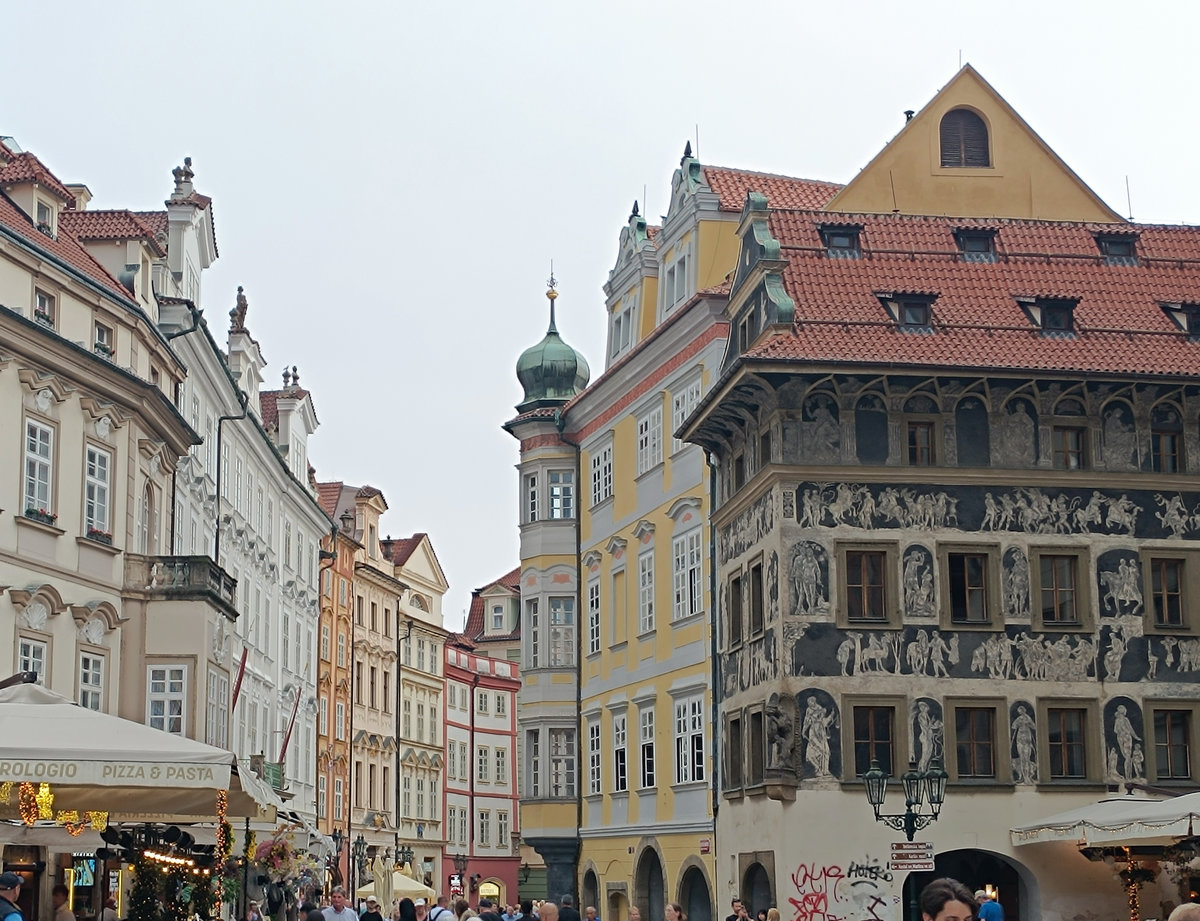
The Kafka family lived in this house from 1889 to 1896 — Franz was 6 to 13 years old here. Dům U Minuty (House at the Minute) stands on the corner of Old Town Square next to the Old Town Hall, and its extraordinary sgraffito facade — Renaissance scenes from classical mythology in black and white — is one of the most beautiful building surfaces in Prague.
The building is now used as municipal offices and is not open to the public. The exterior is the attraction. Stand on the Old Town Square side and look at the full facade: the scenes include figures from Ovid’s Metamorphoses and allegorical representations of virtues. Then look at the child who grew up looking at these walls and later wrote about transformation and metamorphosis.
The Old-New Synagogue is the oldest active synagogue in Europe, built around 1270. Kafka attended services here and the synagogue appears in several accounts of his life. The building’s interior — Gothic ribbed vaulting, medieval pews, the ancient eternal flame — is among the most affecting religious spaces in Prague.
According to legend, the Golem of Prague — the clay figure brought to life by Rabbi Loew in the 16th century — rests in the synagogue’s attic. Kafka knew this legend. It surfaces, transformed, in his writing about constructed creatures that outlive their creators’ intentions.
The Franz Kafka Museum in Malá Strana is the only dedicated Kafka museum in Prague and one of the best literary museums in Central Europe. The permanent exhibition — The City of K: Franz Kafka and Prague — is dense, intelligent and takes its subject seriously. Original manuscripts, letters, photographs and documents are combined with atmospheric installations that evoke the bureaucratic labyrinths and spatial distortions of Kafka’s fiction.
The museum is in a converted brick warehouse on the river, a 2-minute walk from the Malá Strana end of Charles Bridge. The view from the entrance across to Old Town is one of the finest in Prague — and it costs nothing to stand there even if you skip the museum.
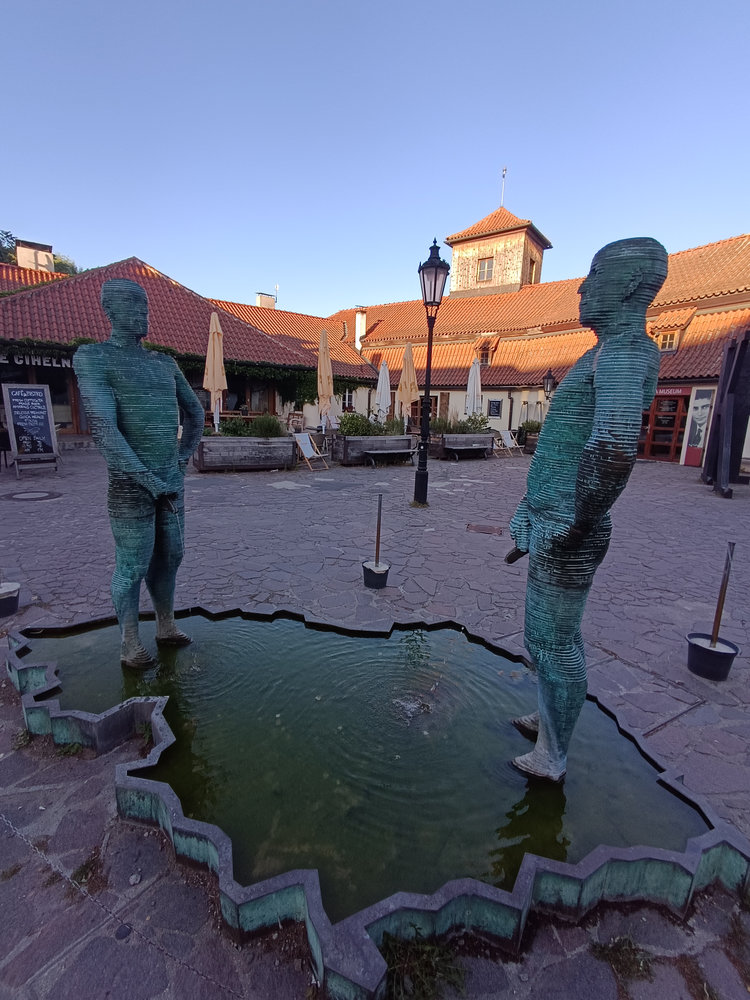
David Černý’s Metalmorphosis — a 45-layer rotating stainless steel head of Franz Kafka, 11 metres tall — stands outside the Nový Smíchov shopping centre in Smíchov. The layers rotate independently, constantly assembling and dissolving Kafka’s face. It is one of the most extraordinary public sculptures in Prague and almost entirely off the tourist trail.
The head is best seen at two times: midday when the sun catches the steel, and at dusk when the surrounding lights give it an eerie quality. The rotation is slow — the face assembles and dissolves over a cycle of several minutes. Watch it for long enough and you start to notice that Kafka’s face is never entirely itself. Which is, of course, the point.
Kafka rented house No. 22 on Golden Lane from his sister Ottla from November 1916 to May 1917 and wrote there in the evenings. The street — a row of tiny, brightly painted houses built into the castle walls for the castle guards in the 16th century — is now a major tourist attraction. House No. 22 is marked with a plaque.
The irony is that Kafka valued Golden Lane precisely for its quietness and remove from the city. It is now one of the most crowded spots in Prague Castle. Go early morning or after 4pm for the closest approximation of what Kafka actually found there.
Café Louvre opened in 1902 and became one of the intellectual centres of Prague. Kafka came here regularly with his circle — Max Brod, Franz Werfel and other Prague German-speaking writers who met at the tables on the first floor overlooking Národní třída. The café retains its original Art Nouveau interior: marble tables, bentwood chairs, dark panelled walls, the billiard room at the back.
Coffee here is not cheap by Prague standards, but it is significantly cheaper than it would be at an equivalent café in any other Central European capital. Order what Kafka would have ordered: black coffee, a piece of cake, something to read. The billiard room at the back is the most atmospheric spot.
Franz Kafka is buried in the New Jewish Cemetery in Žižkov, in a plot he shares with his parents (both of whom outlived him). He died of tuberculosis on 3 June 1924 at a sanatorium in Kierling, near Vienna, at the age of 40. His companion Dora Diamant was with him at the end.
The grave is in Section 21, Row 14. A map at the cemetery entrance shows the location. The grave receives more flowers, stones and small notes from visitors than any other in the cemetery. Many visitors leave a small stone on the grave marker — a Jewish tradition of remembrance that marks the grave as visited and not forgotten.
Half-Day Version — If You Have 3 Hours
If you have half a day, focus on the Jewish Quarter area and skip the tram journeys to Smíchov and Žižkov:
→ Stop 1: Kafka’s Birthplace (5 min)
→ Stop 2: House at the Minute (10 min)
→ Stop 3: Old-New Synagogue (30 min)
→ Stop 4: Kafka Museum (75 min)
→ Coffee at Café Louvre (45 min)
Save the Rotating Head (Stop 5), Golden Lane (Stop 6) and the grave (Stop 8) for a return visit or a full day.
Was Kafka Czech, German or Austrian?
All three — and none completely. Kafka was born a subject of the Austro-Hungarian Empire in its Bohemian crown lands, which makes him Austrian by citizenship. He wrote in German, which was the language of the educated Jewish bourgeoisie in Prague at the time. He identified with Czech culture in some ways but did not write in Czech. When Czechoslovakia was established in 1918, he became technically Czechoslovak. He died in 1924. The Nazis later classified him as Jewish and banned his books. The Soviets later classified his work as decadent and bourgeois and banned his books again. Today Prague claims him enthusiastically.
Frequently Asked Questions — Kafka’s Prague
This article contains affiliate links. If you book through them, HelloPrague earns a small commission at no extra cost to you. All recommendations are based on personal experience and honest assessment. Affiliate disclosure →

 Dan
Dan
 Petr
Petr