Prague Travel Guide 2026: Everything You Need to Know Before You Visit

Travel Guide

Flights, transfers, hotels, top attractions, food, money, safety & insider tips — the complete guide for first-time visitors

Updated 2025 First-time visitors All budgets Practical & honest

Prague is one of the most beautiful cities in Europe and one of the most visited — and with good reason. Gothic spires, a fairy-tale castle above the river, cobblestone streets, outstanding beer and a food scene that has quietly become one of the best in Central Europe. It is also a city where an unprepared visitor can spend too much, eat badly and miss the best parts entirely. This guide exists to make sure that does not happen to you.

CZKCurrency (not Euro)
PRGAirport code
17 kmAirport to centre
€8–14Avg pub meal + beer
CETTime zone (UTC+1)
112Emergency number

Why Visit Prague

Prague escaped the large-scale bombing of the Second World War that destroyed so many European capitals — which means its medieval and Baroque city centre is among the most intact in the world. Walking from Old Town Square to Prague Castle is genuinely like moving through centuries of architecture with almost nothing modern interrupting the view.

But Prague is not just a museum. The city has a vibrant contemporary life — excellent restaurants, a thriving café culture, lively neighbourhoods, and a beer tradition that is arguably the finest in the world. Czech lager costs less than bottled water in most pubs. A Michelin-starred dinner costs a fraction of an equivalent meal in Paris or Vienna. The city is outstanding value by any Western European comparison.

It is also compact enough to cover the main highlights on foot in two or three days, while offering enough depth — hidden neighbourhoods, day trip destinations, a growing arts and music scene — to reward longer stays repeatedly.


Best Time to Visit Prague

SeasonWeatherCrowdsVerdict
April – May 12–20°C · Flowers blooming Moderate, growing Best overall — beautiful, manageable
Sept – Oct 10–18°C · Golden light Dropping off sharply Best for atmosphere & photos
June – August 22–28°C · Hot spells Peak — very busy Great weather, highest prices & queues
Dec – Feb -2–5°C · Snow possible Low (except Christmas) Cheapest rates · magical Christmas markets
November / March 4–10°C · Grey Very low Excellent value · authentic city experience

The honest recommendation: May and September are Prague’s sweet spots. The weather is excellent, the city is beautiful, and the crowds are present but not overwhelming. July and August are perfectly fine for visiting but you will share the castle and Charles Bridge with very large numbers of people and pay peak hotel prices throughout.

Christmas Markets Tip: Prague’s Christmas Markets (late November to early January) are genuinely among the best in Europe. Old Town Square transforms completely. If you visit in December, book your hotel at least 2–3 months ahead — rooms fill fast and prices spike sharply around the market period. Read our complete Christmas Markets guide for everything you need to know.

How to Get to Prague — Flights
Václav Havel Airport (PRG) · 17 km from the city centre

Prague’s Václav Havel Airport (IATA: PRG) is well connected to most major European hubs and has direct flights from many North American, Middle Eastern and Asian cities. It is a compact, easy airport to navigate — arrivals, baggage and transport connections are all straightforward.

Main airlines serving Prague: Wizz Air, Ryanair, easyJet, Czech Airlines, Lufthansa, KLM, British Airways, Air France, Turkish Airlines, Emirates and many others. Budget carrier routes expand significantly in summer.

Best times to book: For summer visits, book flights 3–4 months ahead. For shoulder season (April–May, September–October), 6–8 weeks ahead typically gives good prices. January and February flights for spring trips are often the best value window.

Search Flights to Prague (PRG)

Kiwi.com’s “Nomad” feature is particularly useful if you want to combine Prague with other Central European cities — it finds the cheapest multi-city route automatically.


Getting from Prague Airport to the City Centre
Private transfer · Public transport · Taxi comparison

Prague Airport is 17 km northwest of the city centre. Journey time is 25–45 minutes depending on traffic and mode of transport. You have three main options:

Option 1 — Pre-booked Private Transfer (Recommended)

A fixed-price private transfer from the airport to your hotel is the most stress-free arrival option. The driver meets you at arrivals with a name board, helps with luggage, and takes you directly to your hotel door. Price: €15–25 for a standard car. Worth every cent after a long flight.

Option 2 — Public Transport (Cheapest)

Bus 119 from Terminal 1 or 2 connects to Nádraží Veleslavín Metro Station (Line A, green line). From there, metro to the city centre takes 10–15 minutes. Total journey: 45–55 minutes. Cost: CZK 40 (one single ticket covers the whole journey including metro). Buy tickets at the yellow ticket machines in the arrivals hall — card payment accepted.

Option 3 — Taxi (Use with Caution)

Prague airport taxis have a long history of overcharging tourists. If you use a taxi, only use the official AAA Radio Taxi or Liftago app — never accept offers from drivers approaching you in the terminal. Expect to pay CZK 500–700 (€20–28) for a metered ride to the centre.

Avoid: Any driver who approaches you in the arrivals hall offering a ride. These are unofficial operators who routinely charge 3–5x the correct price. Always book in advance or use the official taxi rank outside the terminal.
Book Your Prague Airport Transfer in Advance

Booking a transfer before you leave home takes 5 minutes and removes the single biggest source of stress on arrival day. All three services offer free cancellation up to 24 hours before pickup.

For the full breakdown of every transport option — including the night bus, shared shuttles and exact step-by-step public transport instructions — read our complete Prague Airport to City Centre guide.


Where to Stay in Prague
Best neighbourhoods explained · all budgets covered

Prague’s accommodation options range from budget hostels at €15/night to five-star castle-view hotels at €500+. The neighbourhood you choose matters more than the star rating — staying in the right area puts everything within walking distance and transforms the trip.

Old Town (Staré Město) — Best for First-Timers

The most convenient base for a first visit. Charles Bridge, the Astronomical Clock, the Jewish Quarter and easy tram connections to the castle are all within walking distance. Buzzy and atmospheric at night, though the immediate Old Town Square area gets noisy until late. Expect to pay a 20–30% premium over comparable hotels in other neighbourhoods.

Malá Strana (Lesser Town) — Most Atmospheric

Below the castle, across Charles Bridge. Baroque palaces, hidden gardens, some of the most beautiful streets in Prague. A 15-minute walk to the castle, 10 minutes to Charles Bridge. The most romantic neighbourhood to wake up in. Mid-range and boutique hotels are well represented.

Vinohrady — Best Value & Local Feel

One Metro stop (5 minutes) from Wenceslas Square. Art Nouveau apartment buildings, excellent independent restaurants and cafés, quiet at night, genuinely local atmosphere. The best value neighbourhood for mid-range hotels and the area that will make you feel most like a Prague resident.

New Town (Nové Město) — Practical & Central

Around Wenceslas Square and the National Museum. Very well connected by Metro and tram, good range of hotels at all price points, and a 15-minute walk to Old Town Square. Less atmospheric than Malá Strana but highly practical, especially if you have an early flight or late arrival.

NeighbourhoodBest ForBudget Guide
Old TownFirst visit · maximum convenience€80–250/night
Malá StranaAtmosphere · romance · castle proximity€70–300/night
VinohradyLocal feel · best value€50–150/night
New TownBusiness travel · transport links€60–200/night
Žižkov / KarlínBudget · authentic · emerging scene€30–90/night
Book Your Prague Hotel

Always choose flexible/free cancellation rates when booking — Prague hotel prices fluctuate and a better deal often appears closer to your travel date. Both platforms let you filter by cancellation policy.

For detailed hotel recommendations in each category — boutique, luxury, budget and castle-view — read our Best Boutique Hotels in Old Town and Top 10 Luxury Hotels with Castle Views.


Getting Around Prague

Prague is one of the most walkable cities in Europe for its size. Old Town, Charles Bridge, Malá Strana and the castle are all connected by a walkable route — the entire historic centre can be covered on foot in a day. For longer distances, the public transport system is excellent.

Public Transport

Prague’s integrated transport network (PID) covers Metro, trams and buses. The Metro has three lines (A/green, B/yellow, C/red) and covers the main tourist areas. Trams are the backbone of the city — Line 22 is the tourist tram, running from the National Theatre through Malá Strana and up to the castle area. A single ticket (CZK 40) covers 90 minutes of travel on all modes. A 24-hour pass costs CZK 120, a 72-hour pass CZK 330.

Download the PID Lítačka app — it lets you buy transport tickets on your phone, check real-time tram and metro arrivals, and plan routes. Free, works in English, and means you never need to find a ticket machine.

Taxis & Ride Apps

Use Bolt or Uber — both operate in Prague and show the price before you book, eliminating overcharging. Never hail a taxi on the street in tourist areas. The old Prague taxi scam (wildly inflated meters for tourists) has largely been replaced by app-based rides, but unofficial drivers still operate around Charles Bridge, Old Town Square and the castle.

Cycling

Prague’s centre is hilly and cobblestoned — not ideal for standard cycling. Electric bikes and scooters make more sense and are available through Rekola bike share and several e-scooter operators. For longer rides on flatter ground, the Vltava riverside paths are excellent.

Rent a Bike or Scooter in Prague

A bike is one of the best ways to explore the Vltava embankment and Letná Park — flat, scenic, and completely away from the tourist crowds in the centre.


Top Attractions in Prague
What to see, in what order, and how to avoid the queues

Prague’s historic centre is compact enough that most of the major sights are within a 30-minute walk of each other. Here are the essential ones, with honest notes on each.

Prague Castle (Pražský hrad)

The world’s largest ancient castle by area, sitting above the city on Hradčany hill. The castle complex contains St. Vitus Cathedral, the Old Royal Palace, Golden Lane and the Lobkowicz Palace. Allow a full half-day. Arrive before 9:30 AM to beat the tour groups — this single timing decision is the difference between a magical morning and a crowded queue. Read our complete Prague Castle guide for tickets, circuits and insider tips.

Old Town Square & Astronomical Clock

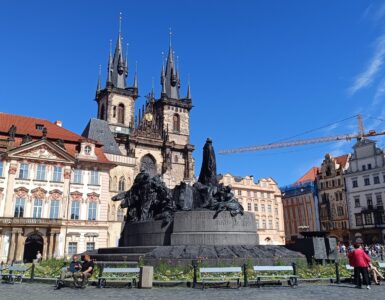
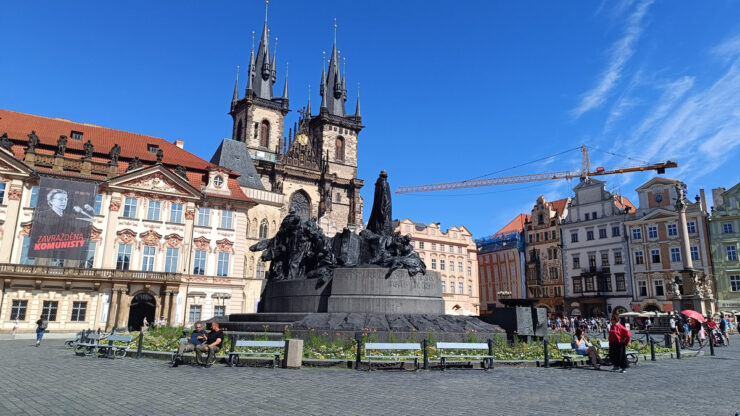
The beating heart of Prague — Gothic churches, Baroque palaces, and the famous 15th-century Astronomical Clock. The clock puts on a mechanical show at the top of every hour. Climb the Old Town Hall Tower (CZK 250) for the finest rooftop view of the square and city. Go early morning for photography — by 10 AM the square is busy.

Charles Bridge (Karlův most)

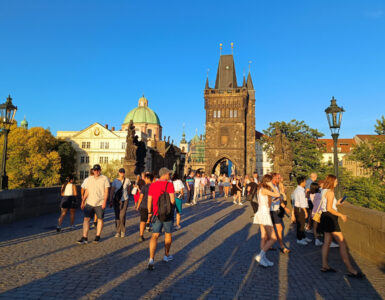
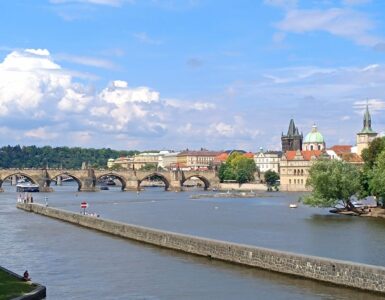
Built in 1357, lined with 30 Baroque statues, and one of the most photographed bridges in Europe. Cross it at sunrise for the most atmospheric experience — the castle in the mist, almost no crowds, and the best light for photography. At midday in summer it is extremely busy but still unmissable.

Jewish Quarter (Josefov)

Six synagogues and the Old Jewish Cemetery in a few hundred metres — one of the most significant collections of Jewish heritage in the world. The Old Jewish Cemetery alone, with layers of tilted headstones from 1439 to 1787, is one of the most moving and extraordinary spaces in Prague. Buy tickets online to skip the queue. Allow 2–3 hours for the full circuit.

Petřín Hill & Tower

A green hill rising above Malá Strana, topped by a miniature Eiffel Tower replica with panoramic views. Take the funicular railway from Újezd Street — it runs every 10–15 minutes and the views on the way up are beautiful. Read our Petřín Tower complete guide for what to expect at the top.

Wenceslas Square & National Museum

More boulevard than square — 750 metres of history, from the 1968 Soviet occupation protests to the 1989 Velvet Revolution crowds. The Neo-Renaissance National Museum at the top end was renovated in 2018 and is now one of the finest museum buildings in Central Europe.

Vyšehrad

Prague’s second castle, sitting on a cliff above the south end of the Vltava. Far fewer tourists than Prague Castle, extraordinary views of the river, and the cemetery where Czech composers Dvořák and Smetana are buried. Free to enter the grounds. A perfect half-morning addition to a 3-day itinerary.

Book Prague Attraction Tickets in Advance

The Go City Prague Pass is genuinely worth it for visits of 3+ days. It covers Prague Castle, the Jewish Quarter, Old Town Hall Tower, Petřín Tower and more — the maths works out easily on Day 2.


Best Day Trips from Prague

Prague’s central position in Bohemia makes it an excellent base for day trips. Several of Central Europe’s most extraordinary destinations are within 1–2 hours.

Top Day Trips from Prague

  • Kutná Hora — 55 min by train · The Sedlec Ossuary (bone church) + Gothic St. Barbara’s Cathedral. One of the most extraordinary day trips in Europe. Read our complete Kutná Hora guide.
  • Karlštejn Castle — 40 min by train · Gothic castle built by Charles IV in 1348, rising dramatically above a forest valley. Easy half-day trip.
  • Český Krumlov — 3 hrs by bus · UNESCO-listed Renaissance town with a castle and one of the most picturesque old towns in Central Europe. Worth a full day or overnight.
  • Karlovy Vary — 2 hrs by bus · The grand spa town of the Bohemian aristocracy. Colonnaded promenades, hot springs and Art Nouveau architecture. A very different side of the Czech Republic.
  • Bohemian Switzerland National Park — 1.5 hrs by train/bus · Dramatic sandstone rock formations, gorges and forest. The Pravčická brána natural arch is the largest in Central Europe.
Day Trips from Prague — Tours & Car Hire

For Kutná Hora and Karlštejn, the train is fast and cheap and a guided tour is the easiest option. For Český Krumlov and Bohemian Switzerland, a rental car gives you much more flexibility and is worth the extra cost.


Food & Drink in Prague

Czech cuisine is built around slow-cooked meat, bread dumplings, sauerkraut and exceptional beer. It is deeply satisfying when done well. The tourist traps are easy to identify (laminated photo menus, anyone touting outside the door) and easy to avoid if you walk two minutes away from Old Town Square in any direction.

Must-Try Dishes

  • Svíčková na smetaně — Braised beef in cream sauce with dumplings and cranberries. The national dish. Order it at Lokál Dlouhá for the benchmark version.
  • Guláš — Czech beef goulash with bread dumplings. Hearty and cheap in any decent pub.
  • Tatarák — Beef tartare. Prague does this exceptionally well — raw minced beef with egg yolk, mustard and rye toast. A standard pub starter, not a luxury item.
  • Trdelník — The spiral chimney cake sold everywhere. Delicious but not a traditional Czech food — enjoy it for what it is (a good tourist snack) without thinking you are eating something authentic.
  • Chlebíčky — Open sandwiches at any good delicatessen. The best quick lunch in the city.

Beer in Prague

Czech beer is among the finest in the world and costs less here than anywhere else. A half-litre of Pilsner Urquell in a proper pub costs CZK 55–70 (€2.20–2.80). The key rule: drink it in a pub with a tank line, not from a bottle. Tank-conditioned Czech lager is incomparably better than bottled. Lokál (multiple locations), Pivovarský Dům (brewery restaurant) and any hospoda off the tourist trail will pour it correctly.

For a full guide to where to eat and what to order, including our Michelin picks and budget recommendations, read our Best Restaurants in Prague guide.


Money, Currency & Budget

Currency

Prague uses the Czech Koruna (CZK) — not the Euro, despite the Czech Republic being an EU member. Always pay in CZK. If a card machine offers to charge you in your home currency (“dynamic currency conversion”), always decline and choose CZK — the exchange rate applied by the merchant is almost always worse than your bank’s rate.

Getting Czech Koruna

Use ATMs — they give the best exchange rates. Avoid the currency exchange kiosks in tourist areas, especially those advertising “zero commission” — they compensate with terrible exchange rates. Withdraw CZK from an ATM at the airport or any bank in the city. Revolut and Wise cards work excellently in Prague with no foreign transaction fees.

Exchange Rate Trap: Several exchange offices in Old Town display large “0% commission” signs but apply exchange rates 15–20% worse than the interbank rate. The “commission” is simply hidden in the rate. Never exchange cash at a street kiosk — use an ATM or your bank card instead.

Budget Guide

Budget LevelDaily Cost Per PersonWhat It Gets You
Budget€40–60/dayHostel dorm · pub lunches · public transport · free attractions
Mid-range€80–130/day3-star hotel · restaurant meals · 1–2 paid attractions
Comfortable€150–220/day4-star hotel · good restaurants · guided tours · day trip
Luxury€350+/day5-star hotel · fine dining · private guides · everything

Prague is excellent value by Western European standards. A city that costs half what you would spend in Paris or London, with architecture and experiences that rival both.


Staying Connected — eSIMs & Mobile Data

Czech Republic has excellent 4G and 5G coverage throughout Prague and most of the country. You have two main options for mobile data as a visitor: a local SIM card from a Czech operator, or an eSIM activated before you leave home.

An eSIM is the easier option for most travellers — you buy it online, install it before your flight, and have data the moment you land. No queuing for a SIM card, no hunting for a phone shop. Prices start from around €4 for a basic Czech data plan.

Stay Connected in Czech Republic — eSIMs

Airalo is the simplest option for a single-country trip. Drimsim is better value if Prague is one stop on a longer European journey — one card covers all countries.


Safety & What to Avoid in Prague

Prague is a very safe city by any European standard. Violent crime against tourists is extremely rare. The risks are almost entirely confined to petty crime and tourist-targeted scams — all of which are avoidable with basic awareness.

Pickpockets

Operate on Charles Bridge, in Old Town Square, in the Metro and on crowded trams (especially Line 22 to the castle). Keep your wallet in a front pocket or inside zip. Do not carry your passport unless necessary — a photo on your phone is sufficient for most purposes. Money belts are overkill for Prague but a cross-body bag with a zip is sensible.

Taxi Scams

Largely replaced by app-based rides (Bolt, Uber) but still present around tourist areas. Never get into an unmarked car or accept a ride from someone approaching you. Always book via app.

Currency Exchange Scams

Already covered above — street exchange kiosks with “0% commission” signs apply very bad rates. Use ATMs only.

Overpriced Restaurants on the Square

Any restaurant directly on Old Town Square, Malostranské náměstí or near the castle gates charges 2–3x the price of equivalent restaurants one street away, for food that is often worse. Walk 2 minutes in any direction and the quality and value improve dramatically.

Emergency Numbers

  • 112 — General European emergency (English-speaking operator)
  • 155 — Ambulance (Czech)
  • 158 — Police (Czech)
  • 150 — Fire brigade (Czech)
Travel Insurance & Flight Protection

EU Regulation 261/2004 entitles passengers to compensation for flight delays of 3+ hours. Compensair handles the entire claim for you — worth checking even if your flight was months ago.


Useful Czech Phrases

English is widely spoken in Prague’s tourist areas, hotels and restaurants. However, a few words of Czech go a very long way with locals — even a badly pronounced děkuji (“thank you”) will be appreciated and often rewarded with a warmer, more helpful response.

CzechPronunciationMeaning
Dobrý denDOH-bree denGood day (formal hello)
AhojAH-hoyHi / Bye (informal)
DěkujiDYEH-koo-yiThank you
ProsímPROH-seemPlease / You’re welcome
Mluvíte anglicky?mloo-VEE-teh ANG-lits-kyDo you speak English?
Kolik to stojí?KOH-lik toh STOH-yeeHow much does it cost?
ZaplatímZAH-plah-teemI will pay (to ask for the bill)
Jedno pivo, prosímYED-noh PEE-voh PROH-seemOne beer, please
Na zdraví!NAH zdrah-VEECheers!

Luggage Storage in Prague

If you have an early check-in or late checkout, luggage storage lets you explore the city completely hands-free. Storage lockers are available at Praha Hlavní nádraží (main train station) and at several locations around the Old Town and castle area. Pre-booking online is cheaper and guarantees availability.

Luggage Storage in Prague

Particularly useful on Day 1 (arrival before check-in) and the last day (after checkout, before your flight). Radical Storage partners with local shops and hotels near all the main tourist areas.


Frequently Asked Questions

Is Prague expensive for tourists?
Prague is very affordable by Western European standards. A proper pub meal with beer costs €8–14. A 3-star hotel in a good location costs €60–100/night. Public transport is around €1.60 per journey. The main tourist traps — restaurants on Old Town Square, currency exchange kiosks — are avoidable and Prague rewards visitors who take 2 minutes to walk off the main tourist strip.
How many days do you need in Prague?
Three days is the ideal minimum for a first visit — enough to cover the castle, Old Town, Charles Bridge, the Jewish Quarter and one day trip or afternoon in a local neighbourhood. Two days covers the highlights if your time is limited. Five or more days is ideal if you want to explore neighbourhoods, visit Kutná Hora and Český Krumlov and experience the city properly. Read our 3 Days in Prague itinerary for a day-by-day plan.
Does Prague use the Euro?
No — Prague uses the Czech Koruna (CZK). As of 2025, roughly €1 = CZK 25. Always pay in CZK and always decline “dynamic currency conversion” when your card terminal offers to charge in your home currency. Use ATMs for cash, not street exchange kiosks.
Is Prague safe for tourists?
Yes — Prague is one of the safer capital cities in Europe. Violent crime against tourists is very rare. The main risks are pickpockets in crowded tourist areas (Charles Bridge, Metro, Old Town Square) and pricing scams (overpriced restaurants on the square, bad-rate currency exchange). Both are easily avoided with basic awareness.
What is the best way to get from Prague Airport to the city?
A pre-booked private transfer is the most convenient — fixed price, driver meets you in arrivals, direct to your hotel. Costs €15–25. The cheapest option is Bus 119 to Nádraží Veleslavín Metro Station (Line A), then metro to the centre — costs CZK 40 and takes around 50 minutes. Never accept a taxi offer from a driver approaching you in the terminal — always book in advance or use the official rank.
Do I need to book Prague attractions in advance?
Yes, for the most popular ones. Prague Castle and the Jewish Quarter both have significant ticket queues in summer — buying online saves 30–45 minutes of queuing. The Go City Prague Pass covers both and is worth considering for visits of 3+ days. Charles Bridge and most of the city’s exterior sights are free and need no booking.
What language do people speak in Prague?
Czech is the official language. English is widely spoken in hotels, restaurants and tourist areas — especially by anyone under 40. German is useful in some older establishments. Learning a few Czech words (děkuji = thank you, prosím = please, na zdraví = cheers) is appreciated by locals even if you only manage the pronunciation approximately.
What is the best neighbourhood to stay in Prague?
Old Town (Staré Město) for first-time visitors who want maximum convenience. Malá Strana for atmosphere and romantic stays. Vinohrady for local neighbourhood feel and best value. All three put you within 20 minutes walk of the main attractions.

Ready to Plan Your Prague Trip?

Start with the two things that make the biggest difference to any visit — a good flight price and your hotel sorted before you arrive.

Search Flights to Prague Find Your Hotel

This article contains affiliate links. If you book through them, HelloPrague earns a small commission at no extra cost to you. We only recommend services we genuinely believe will improve your Prague visit. Full disclosure

grozdan44

Follow us

Don't be shy, get in touch. We love meeting interesting people and making new friends.

Most popular

Most discussed